G4GC’s Dr. Monique Couvson Listed a Prestigious ‘Closer’ by TIME

G4GC’s Dr. Monique Couvson Named to TIME’s 2025 List of ‘The Closers’

Philanthropy Women is thrilled to announce that Dr Monique Couvson has been recognized and honored by TIME Magazine. She has been placed on the magazine’s list of “The Closers”. This prestigious award recognizes 25 Black leaders who are driving powerful change by working to close gaps in racial equity.

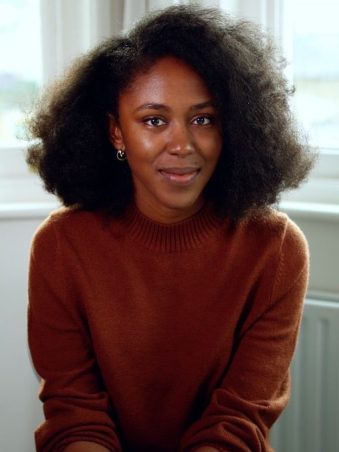
Monique Couvson, president and CEO of Grantmakers for Girls of Color. (Image credit: G4GC)

Dr. Couvson is the president and CEO of Grantmakers for Girls of Color (G4GC), the primary national philanthropic intermediary organization with an explicit focus on girls and gender-expansive youth of Color in the U.S. and territories. In the short span of four years, she has helped convene 100 funders, moved more than $26 million to 400 organizations, and developed four signature funds such as The Black Girl Freedom Fund, The New Songs Rising Initiative for indigenous girls, the Holding a Sister Initiative for trans girls of color, and the Love Is Healing Fund. In addition, she co-founded the #1Billion4BlackGirls campaign.

Read More

Raising the Value of Communities by Investing in Girls of Color

Editor’s Note: Happy Juneteenth! In celebration, we are sharing the words of Dr. Monique Couvson, president and CEO of G4GC and the author of six books, including “Charisma’s Turn” (The New Press, 2023), a graphic novel about girls and their gifts.

As we navigate through this pivotal moment in history of rollbacks to civil rights, gender justice, and social progress, we are also seeing a generational transfer of wealth boosting women’s economic power and  women taking bold measures to move capital into the hands of other women.

Dr. Monique Couvson, president and CEO of G4GC  (Image credit: G4GC)

While we recognize and applaud how women are poised to shape a new type of philanthropy, it is imperative that in this effort girls —and in particular girls and gender-expansive youth of color, receive a robust and intentional investment. These young people are at the forefront of all social justice movements, and yet their contributions go overlooked and erased. As we move funds to women-serving organizations, we must also move money explicitly to organizations that center and are led by girls of color. That is how we can combat the erasure of Black girls and girls of color, and create opportunities for their courageous activism and leadership to thrive.

Read More

Blaustein: Create New Global Systems by Funding Local Women

Dear Readers: This essay is written by Susan M. Blaustein, Founder/Executive Director, WomenStrong International.

As we witness the world aflame with conflict- and climate-fueled disasters, it is urgent this International Women’s Day that we support and strengthen the peacemakers, the healers, the teachers, advocates, the community-builders: of course, I mean the women.

WomenStrong International supports Projet Jeune Leaders in Madagascar. (Image credit:  Projet Jeune Leader)

In climate-related emergencies, we see over and over that local women leaders and the organizations they lead are best-positioned to know who is most vulnerable, where those individuals and families are living, which forms of relief are most urgent, and where those relief services can be safely and reliably located. 

Read More

Biden Helps Women, Fearless Fund Update, Little League Opens Grants

It should no longer be a secret that more than half of all college degrees are granted to women. This has been the trend for some time now. So when the Biden Administration announced the cancellation of student debt for approximately 153,000 borrowers, the math tells us that most of those benefiting are women. Finally, some good news.

According to the Fact Sheet released by the White House, a total of $1.2 billion in student debt will be forgiven.

Grants are now open for Girls with Game. See below. (Image credit: Little League)

To qualify, the borrower must be enrolled in the administration’s Saving on a Valuable Education (SAVE) program. The initial debt must be under $12,000, and the borrower must have been making payments for at least ten years. The SAVE plan bases payment amounts on income and family size.

Read More

More Feminist Giving News than Ever, and Happy Thanksgiving!

The feminist giving news is coming at us fast and furious here at Philanthropy Women, and I am truly like Lucille Ball working in the candy store on the conveyor belt, with my mouth and shirt packed with candies and nowhere to go with them all. In my highly packed schedule of clinical sessions and book editing sessions, there is not much time left to write up all of this feminist giving news.

Top feminist giving news stories, much like the chocolates on Lucy and Ethel’s conveyor belt, are relentless. (Image credit: I Love Lucy)

But I will enumerate some of the big happenings nonetheless, as I work away at changes to the proof hardcover copy of Feminist Giving. I am surprised at how many people seem to want to buy a paper copy, preferring it over the ebook. The ebook is a much more facile resource for connecting to the web of feminist giving activity, research, and thought leadership, as it contains the links to the 240 citations in the book. In the print book, those citations are all enumerated and listed in the end notes.

Read More

MacKenzie Scott’s Newest Batch of Culture-Challenging Donations

Very few of us can get away with challenging the capitalist and male-dominated values of our country. Unless you have a lot of money, you generally make more headway in American society if you watch every word you say and every move you make to ensure they remain within the lines of the men-first, pro-business, money-above-everything mentality that surrounds us. But MacKenzie Scott is able to challenge these ideas by sharing her resources with organizations that are doing the work on the ground for a better quality of life in America.

MacKenzie Scott with husband Dan Jewett. (Image credit: The Giving Pledge)

This week, MacKenzie Scott put organization names and faces to the recent $3.8 billion she distributed. The money went to a vast array of organizations that support the social and economic fabric of our culture. Here on PW, we are going to provide the gender-lens pull-out list of organizations receiving funding, with the proviso that there are other layers in her funding that satisfy feminist giving values around equity and inclusion but are not explicitly addressing gender bias. These organizations are helping us navigate new territory as a society, a place where we can prioritize healthier relationships, personal wellness, and quality education and healthcare experiences. Almost all of the organizations on this list have been covered in articles here at Philanthropy Women over the past five years.

Read More

Natasha Brown’s Powerful Debut Novel + Feminist Philanthropy News

Well, hello my donor activist friends! Welcome to another week of exciting feminist philanthropy news, as well as my weekly discussion of happenings related to gender equality at large.

Natasha Brown is the author of Assembly, a fascinating novel about working in the c-suite of financial services in London. (Image credit: Elise Brown)

This week I took a deep excursion into literary culture and read Assembly by Natasha Brown. This novel caught my eye because it was by an author who had a background in financial services and math, yet when I picked up the book and read a few lines, I felt a deep sense of kinship with the words.

I don’t want to give away any spoilers about this book because it’s really a wonderful process to absorb the story without any preconceptions in mind. The story takes a narrative path that I can only describe as an anti-romance, and yet it felt strangely rich and satisfying to me as a reader.

Read More

Plan Report: Girls Fear For Safety from Misinformation Online

As our young women come up in the world, they face a deluge of information online, much of which is contributing to their sense of safety, or lack thereof. A new report from Plan International helps to break down the ways that online disinformation is impacting the lives of girls ages 15 to 24 around the world.

The Truth Gap, a new report from Plan International, helps identify the ways that young women and girls are being impacted by online disinformation. (Image credit: Plan International)

The report, The Truth Gap, helps to explain how girls and young women in 33 countries are experiencing information they find online. The report discovered that one in five girls (20%) feels unsafe due to false information that comes from the internet.

Read More

Marsha Morgan on How Collective Giving Can Uplift Women and Girls

Editor’s Note: This interview in our Feminist Giving IRL series features Marsha Morgan, a founding member of the Birmingham Change Fund and past Chair of the Community Investment Network.

Marsha Morgan, courtesy of Marsha Morgan

1. What do you wish you had known when you started out in your profession?

I wish I had started my journey in philanthropy with a proper understanding of the true definition of philanthropy: love of humanity. Having this knowledge and perspective would have allowed me to take more ownership of my power and would have changed how I leveraged my resources as a philanthropist when I first started working in collective giving.

2. What is your current greatest professional challenge?

Read More

Favianna Rodriguez on the Power of Art to Heal Polarization

Editor’s Note: This interview in our Feminist Giving IRL series features Favianna Rodriguez, President of The Center for Cultural Power, a national organization investing in artists and storytellers as agents of positive social change.

Favianna Rodriguez, courtesy of Favianna Rodriguez
  1. What do you wish you had known when you started out in your profession?

I wish I’d known more about the racial and gender barriers that exist for women of color leaders in the non-profit sector, particularly the arts and culture space. I knew how to pitch my ideas and raise money, but I lacked information on how to navigate situations in which I was experiencing unequal treatment due to my gender and racial identity. I was in many spaces where the safety of women was not prioritized. Unfortunately, over the last 20 years of being an institutional leader, I’ve experienced numerous uncomfortable situations including sexual harassment, the theft of my ideas by male leaders, being bullied by men when I challenged sexist assumptions, and being trained to lead in a boy’s club type of approach. Before, I didn’t have the language or tools to navigate these situations. But that has since changed, and I’m incredibly thankful for that because it gives me the opportunity to create safe spaces for other female and gender non-confirming leaders to thrive.

Read More