Marguerite Casey CEO on Resourcing Abolitionist Feminism

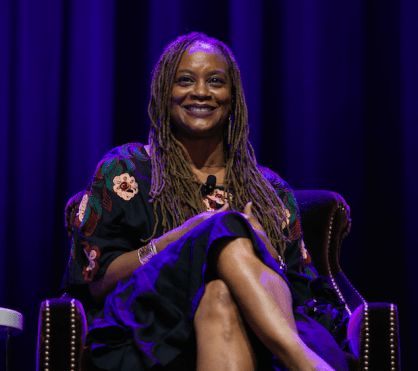
Editor’s Note: This interview in our Feminist Giving IRL series features President and Chief Executive Officer of the Marguerite Casey Foundation, Dr. Carmen Rojas.

carmen rojas
Carmen Rojas, courtesy of Carmen Rojas

1. What do you wish you had known when you started out in your profession?

I spent a lot of time in this sector trying to make sense of power relationships — specifically, those with undue influence, limited imaginations and proximity to the people who have long been excluded from our democracy and economy. I wish I had known that this is a feature in the design of philanthropy, and that it doesn’t need to be this way. I spent so much time trying to convince people in positions of power and people closest to the most resources that the communities I care about lack power in our democracy or representation in our economy, not as a result of individual choices but as a result of systemic design.

Read More

Pop Culture Collaborative Leaders Discuss Funding Narrative Change

Editor’s Note: This dual interview in our Feminist Giving IRL series features Bridgit Antoinette Evans and Tracy Van Slyke, who are, respectively, the Chief Executive Officer and Chief Strategy Officer of the Pop Culture Collaborative, a philanthropic resource and funder learning community.

Bridgit Antoinette Evans and Tracy Van Slyke, courtesy of Bridgit Antoinette Evans and Tracy Van Slyke

1. What do you wish you had known when you started out in your profession?

Bridgit Antoinette Evans: I wish that I’d been introduced to Octavia E. Butler much earlier in life. Octavia wrote about this concept of “positive obsession,” which she described as “not being able to stop just because you’re afraid and full of doubts.” My mother and her siblings were leaders in the Civil Rights movement in Savannah, and while she fiercely believed that her daughters could be anything we wanted to be in the world, she was very clear that we needed to be improving the world while doing it. I wanted to be an artist, and so, as a teen, I became obsessed with one question: “What is the relationship between a great story and widespread cultural change?”

Read More

Electing Women is Key to Happiness: New Report

When men and women are paid more equally and more women are in elected office, a country tends to be more economically successful and happy. Now the Biden Administration is offering more of this kind of happiness in the U.S.

electing women
Electing women was a big theme of the Women’s March, 2018. (Photo by Mirah Curzer on Unsplash)

Riane Eisler and Robyn Baker make some excellent points in a recent article in Ms. Magazine entitled Want to Make Your Country Happier? Elect Women.

The article discusses how the 2021 World Happiness Report has some startling news for the globe: research indicates that generous government spending on society’s infrastructure – the services and systems that improve people’s quality of life – is key to happiness.

Read More

Finance Expert: Minimize Charity. Maximize Gender Lens Investing


Editor’s Note: This article was originally published on November 10, 2019.

Tracy Gray has something important to tell women about their philanthropy: do less of it. It’s not the usual message that donors get from the world, and it’s not the usual message here at Philanthropy Women, either. But the context of this message comes from Gray’s conviction that the quicker we grow women’s wealth through gender lens investing, the quicker we will move toward a better society.

Tracy Gray is the Founder of the 22 Fund, a growth equity investment firm that seeks to create more quality employment opportunities for women and people of color. (Photo credit: anitab.org)

“Take some of your money out of charity and put it into women-owned or women-led businesses,” Gray advised women donors, in a recent phone chat with Philanthropy Women.

Read More

Philanthropy or Investing: Why Not Both?

Editor’s Note: The following article was originally published on February 17, 2021.

When it comes to maximizing our financial impact, there is often an “either/or” approach to leveraging wealth. Do we use our dollars to fund a philanthropic effort, like a campaign or organization dedicated to women and girls, or do we turn our funds toward investment opportunities, like supporting companies with a strong commitment to diversity?

Ellen Remmer is a Senior Partner at The Philanthropic Institute (TPI) and Champion of Invest for Better. (Image Credit: Invest for Better/Ellen Remmer)

As new forms of giving spring up to meet the challenges — and opportunities — of a digital society, we are able to move further away from that attitude of “either/or.” There are ways to stretch our donor dollars further — through two types of collectives that maximize impact.

Read More

LaTosha Brown: The Time is Now to Fund Black Women and Girls

Editor’s Note: This post was originally published on February 11, 2021.

This past summer, before the announcement of Kamala Harris as the nominee for Vice President, Latosha Brown received a phone call from the soon-to-be Vice President. The phone call was in response to an article Brown had published in Essence called Reimagining An America That Uplifts Black Girls. Vice President Kamala Harris wanted Latosha Brown to know that she shared her hope that America could reimagine the country so that all girls will be lifted up.

LaTosha Brown
LaTosha Brown shares her expertise as a movement organizer and leader, calling for more just and equitable funding for Black women and girls. ( Image Credit: LaTosha Brown)

“Vice President Kamala Harris called me to say she had read the article, and that she too was committed to women and girls all across the country,” said Brown, in a recent phone interview with Philanthropy Women.

Read More

And The Winners Are: Announcing the Feminist Giving IRL Top Tier

Editor’s Note: The following post was first published on March 1, 2021, at the conclusion of our Feminist Giving IRL contest.

Feminist Giving IRL Contest Winners Announced! Final Vote Shows Strength in Numbers and Rising Interest in Gender Equality in the Arts, Global Development, and Women in Tech

Gender Equality in Dance, Global Girls Equality, and Women in Tech are the 3 Big Winners

A total of 563 people voted in our Feminist Giving IRL Top Tier Contest. A graphic below shows the distribution of final results.

Final vote for 2021 Feminist Giving IRL: Light blue is representing Elizabeth Yntema’s 33.4% of the vote. Dr. Tessie San Martin in the blue/green on the right came in at #2 with 19% of the vote. Sara Monteabaro is third in the bright pink with 16.5% of the vote. (Image Credit: Google Spreadsheets)

Congratulations to Our Winners!

First, a heartfelt congratulations to our winners, and thanks to all the women leaders profiled in Feminist Giving IRL for being willing to participate in this event. Each of our winners will receive a $100 honorarium and will be invited to participate in our Zoom-based Top Tier Crowning Webinar where we celebrate their accomplishments and discuss their plans for the future of gender equality in their work. Stay tuned for further details on that event.

Read More

AOC: The Powerful Voice of Feminist Giving In Real Life

Editor’s Note: the following post was originally published on February 3, 2021.

Here at Philanthropy Women, we started a series called Feminist Giving In Real Life (F-GIRL) to provide a platform for women leaders at all levels who are giving in a feminist way. This giving can happen through donations and funding strategy, through professional excellence, and/or through leadership efforts in the community. Feminist giving is a form of leadership that has special impact because it often combines deeply personal experience and significantly political thinking and acting.

AOC
AOC became tearful as she disclosed that she is a survivor or sexual assault. In a 90 minute video on Instagram, AOC discussed the ways in which the January 6 riots constituted a form of trauma related to sexual trauma experienced by herself and many other Americans. (Image Credit: AOC on Instagram

Yesterday, Alexandria Ocasio-Cortez performed what I would call a supreme act of feminist giving. When AOC spoke out against the January 6th riots and connected these riots to her experience of being sexually traumatized, she simultaneously stood up for every human who has experience sexual assault, and challenged the largest political body of our country to acknowledge how the January 6th riots are part of a continuum of pervasive violence against women, people of color, and other marginalized groups.

Read More

GLSEN Board Adds New Experts Imara Jones and Malachi Garza

On July 14th, the Gay, Lesbian, and Straight Education Network (GLSEN) welcomed Imara Jones and Malachi Garza to their Board of Directors. Jones, recently announced as a Nathan Cummings Fellow, and Garza, organizing director of Solidaire Network, join a robust team of educators, funders, and educator advocates devoted to creating affirming educational environments for LGBTQ+ youth.

Image Credit: GLSEN, Twitter

About GLSEN

Founded in 1990 by a group of teachers who identified educators’ role in creating a safe and learning-conducive environment for LGBTQ+ students, GLSEN leverages educational activism, extensive research, and student-led movements to uplift evidence-based solutions for LGBTQ+ youth.

Read More

Returning to the Stage: “Prothero” at Great Salt Lake Fringe

For a group of self-described “theater kids”, putting away onstage personalities and shutting the door may have been more difficult than most. But as we move closer to “normal”, one of the first returns we’re eager to see is the return to the stage — and not just the return of the classics, but the start of something new and incredible building its way out of the pandemic.

At The Great Salt Lake Fringe Festival, held this July and August in Salt Lake City, Utah, the return to the stage is more than just a celebration of live performance. Fringe, as an arts movement, is known for themes and stories on the edges — and this year, the rise of marginalized directors, all-female casts, and feminist narratives is more apparent than ever.

Read More