Cynthia Mendes: Exciting New WOC Leadership Possibilities in RI

Readers of Philanthropy Women know that we closely follow the feminist giving strategies on getting more women into politics. Now, an exciting announcement comes from our home state of Rhode Island, as State Senator Cynthia Mendes and Former Secretary of State Matt Brown have announced their joint campaign for Lt. Governor and Governor of Rhode Island.

Cynthia Mendes and Matt Brown announced today their joint campaign for Lt. Governor and Governor of Rhode Island. (Image credit: cynthiaandmattforri.com)

Not only are these two uniquely qualified candidates running together, they have cultivated 50 more progressive candidates running for a large swath of positions in Rhode Island. Together, this could make for a new paradigm of leadership in the state.

Read More

Favianna Rodriguez on the Power of Art to Heal Polarization

Editor’s Note: This interview in our Feminist Giving IRL series features Favianna Rodriguez, President of The Center for Cultural Power, a national organization investing in artists and storytellers as agents of positive social change.

Favianna Rodriguez, courtesy of Favianna Rodriguez
  1. What do you wish you had known when you started out in your profession?

I wish I’d known more about the racial and gender barriers that exist for women of color leaders in the non-profit sector, particularly the arts and culture space. I knew how to pitch my ideas and raise money, but I lacked information on how to navigate situations in which I was experiencing unequal treatment due to my gender and racial identity. I was in many spaces where the safety of women was not prioritized. Unfortunately, over the last 20 years of being an institutional leader, I’ve experienced numerous uncomfortable situations including sexual harassment, the theft of my ideas by male leaders, being bullied by men when I challenged sexist assumptions, and being trained to lead in a boy’s club type of approach. Before, I didn’t have the language or tools to navigate these situations. But that has since changed, and I’m incredibly thankful for that because it gives me the opportunity to create safe spaces for other female and gender non-confirming leaders to thrive.

Read More

Anticipating Philanthropy’s Ability to Fully Fund Gender Equality

Philanthropy Women May be Winding Down Due to Lack of Support for Feminist Media about Donor Leadership, Strategies and Practices.

With nearly 1,100 posts published, an unusually high and rising domain authority, and hundreds of feminist leaders and strategies highlighted, Philanthropy Women is simultaneously a feminist media powerhouse and running out of resources. And it’s not for lack of trying to find those resources, or generate them on our own.

Photo by Valentina Conde on Unsplash

What happened to us? It’s a case of what I can only describe as our strategy anticipating a time when philanthropy is ready to fully invest in equality for women and other marginalized groups. We’re not there yet.

Read More

How Could Biden Enhance Effectiveness of New Gender Policy Council?

A call to action has been issued by the Center for American Progress to the White House Gender Policy Council.

The Center for American Progress put out a report that includes several strong and worthwhile suggestions for the Biden administration. The goal of the report is focused on how the current administration can advance gender equality on both U.S soil and abroad. 

Image Credit: Lindsay Lamont on Unsplash

The crux of the report is focused on the White House Gender Policy council and how it can expand the pre-existing Women, Peace and Security Act (WPS) of 2017. 

WPS has actually existed since 2000, starting after being recognized by the U.N Security Council. Since the implementation of WPS in the United States, a requirement is in place that every four years specific governmental departments and agencies must incorporate WPS  into their work. Further, they are required to host WPS-specific training for personnel, to track the progress of implementation, and to report to Congress on this progress. 

Read More

Old Navy’s Size-Inclusive Shopping Model Sets a New Standard

Old Navy is setting a new standard for size inclusivity with BODEQUALITY, offering a wider range of sizes than any other value retailer.

Old Navy is expanding their available sizes, redesigning their clothes to take down unrealistic standards, and raising awareness of body inclusivity with its BODEQUALITY campaign. (Image credit: Business Wire)
Old Navy is expanding their available sizes, redesigning their clothes to take down unrealistic standards, and raising awareness of body inclusivity with its BODEQUALITY campaign. (Image credit: Old Navy)

Old Navy is revolutionizing the shopping experience with the launch of BODEQUALITY. Beginning on August 20, Old Navy will redefine size inclusion, offering every one of its women’s styles, in every size, with no price difference. As a brand committed to the democracy of style, Old Navy will be the first value retailer to offer sizes 0-30 and XS-4X for all women’s styles at price parity. With this launch, the brand is reimagining the shopping environment in all stores and online to be more size inclusive, giving women everywhere the fashion and experience that they deserve.

Read More

The Brain Health Gap and How It is Hurting Women

Data reveals how women suffer disparities in health funding, especially related to brain disorders. As a result, funding for women’s brain health is alarmingly insufficient and contributing to expensive long-term treatment costs.

Women have been coming out and speaking against the inequities they face in health care. For years, women have been saying that the healthcare field has not had their best interests at heart. They frequently have expressed that the medical community has treated them with dismissal and misdiagnosis. 

WHAM’s research shows a deep disparity in funding for women’s brain health. (Image credit: WHAM)

New data reveals this to be especially poignant in terms of women dealing with brain health disorders. An organization by the name of WHAM (Women’s Health Access Matters), released a report about this data. 

Read More

Black Women Philanthropists Honored by New WPI Initiative

The Women’s Philanthropy Institute (WPI) has launched a new initiative to honor black women and their contributions to philanthropy.

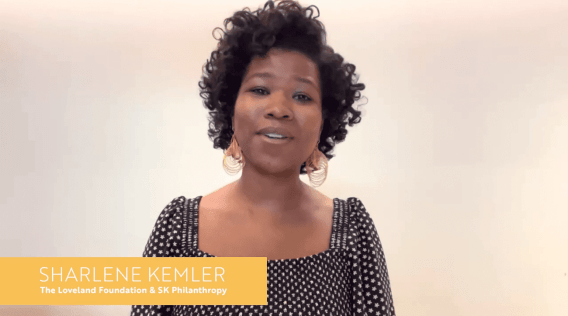
Sharlene Kemler, CEO of the Loveland Foundation, is among the 10 women on WPI's Black Women Give Back List for her contributions to the mental health of black women. (Image credit: IUPhilanthropy)
Sharlene Kemler, CEO of the Loveland Foundation, is among the 10 women on WPI’s Black Women Give Back List for her contributions to the mental health of black women. (Image credit: IUPhilanthropy)

On August 31st, the Women’s Philanthropy Institute (WPI), part of the Indiana University Lilly Family School of Philanthropy, announced the honorees of the Black Women Give Back List, a new initiative to spotlight the important work and contributions of Black women philanthropists. Created in partnership with The Women Invested to Save the Earth (WISE) Fund, the backbone organization for Black Philanthropy Month, the list spotlights 10 outstanding Black women philanthropists from diverse backgrounds who use their time, talent, treasure, testimony and ties to make the world a better place.

Read More

$1.5 Million Grant Will Help Black Women in Biz Succeed in America

A generous $1.5 million grant given to Grameen America is intended to assist black women entrepreneurs with their businesses. 

On August 17th, 2021, Grameen America announced that it received this $1.5 million grant from the Truist Foundation. The Truist Foundation is dedicated to funding nonprofits that work with their communities toward better quality of life. They describe their purpose as being “to inspire and build better lives and communities.”

Grameen America Empowers Low-Income Women

Grameen America is a nonprofit aimed at helping low-income women build small businesses, along with other entrepreneurial ventures necessary for this. Founded by Nobel Peace Prize recipient Muhammad Yunus, the organization provides microloans, training and support to help communities flourish and combat poverty in the United States. They have invested more than $2 billion in women entrepreneurs since their inception in 2008. 

Read More

2020 Elections Diversified State Legislatures Like Never Before

A report from the Donors of Color Network and The Democratic Legislative Campaign Committee (DLCC) reveals major improvements in representation for BIPOC in government.

donors of color
Photo by Gayatri Malhotra on Unsplash

In the past, a prevalent political myth has been that white candidates have more electability and viability than candidates of color. This has led to a dangerous narrative that perpetuates subpar amounts of investment in candidates of color and their campaigns. Additionally, it pushed that white candidates were presumed to win elections.

A new report from Donors of Color and DLCC shows how the 2020 elections more than disproved this narrative. In 2020, we had the highest number of candidates of color elected into state legislator positions in the entire history of the country. This is no small feat to have accomplished, and quite a few factors went into making it possible.

Read More

Marisa Franco on Leadership: Marginalized People Must Seize the Stage

Editor’s Note: This interview in our Feminist Giving IRL series features Marisa Franco, Director and Co-founder of Mijente, a hub for Latinx/Chicanx organizing and movement building.

marisa franco
Marisa Franco, courtesy of Marisa Franco

1. What do you wish you had known when you started out in your profession?

I would reemphasize the importance of relationships, staying curious, and seeking joy and pride in one’s work.

2. What is your current greatest professional challenge?

The leadership development of folks who are looking to get more involved and learn new skills while responding to the many changing conditions we deal with. We have finite time and resources, and it can be a challenge to balance between moving externally to respond to opportunities and crises and doing the development work.

Read More