Editor’s Note: This interview in our Feminist Giving IRL series featuresTyeshia Wilson, director of engagement for Philanthropy Together.
Tyeshia Wilson, courtesy of Tyeshia Wilson
1. What do you wish you had known when you started out in your profession?
Working in philanthropy is one of the most rewarding and self-fulfilling careers, ever. I’m altruistic, I’m a humanitarian, and I’m passionate about service. Looking back, I only wish I had been exposed to the idea of a career in philanthropy earlier. If I was aware of this alignment between my heart and the work of this field, I would have started in this profession much sooner and likely pursued philanthropic studies in school.
In the wake of the pandemic, the Chicago Foundation for Women (CFW) has launched SHEcovery to support women of color in the workforce.
Decades of hard-fought gender equity progress have vanished over the past 18 months as women have been pushed out of the workforce in record numbers due to COVID-19 while taking on increased childcare and caregiving responsibilities. To address these challenges head-on, Chicago Foundation for Women (CFW) today announced SHEcovery™ – a commitment from the Foundation to fund, support, and build a more equitable system that supports Women of Color.
The Women’s Funding Network has announced the addition of Leela Bilmes Goldstein, PhD, Kelly Nevins, and Gina Jackson to its Board.
Leela Bilmes Goldstein, PhD, Kelly Nevins, and Gina Jackson will have taken their seats on the Women’s Funding Network Board of Directors on September 7th, 2021.
Women’s Funding Network announced the appointments of three new additions to its board of directors: Leela Bilmes Goldstein, PhD, Gina Jackson, and Kelly Nevins. The newly appointed members lead community-based women’s funds with national impact for gender equity and justice advocacy. They will have taken their seats on September 7th, 2021.
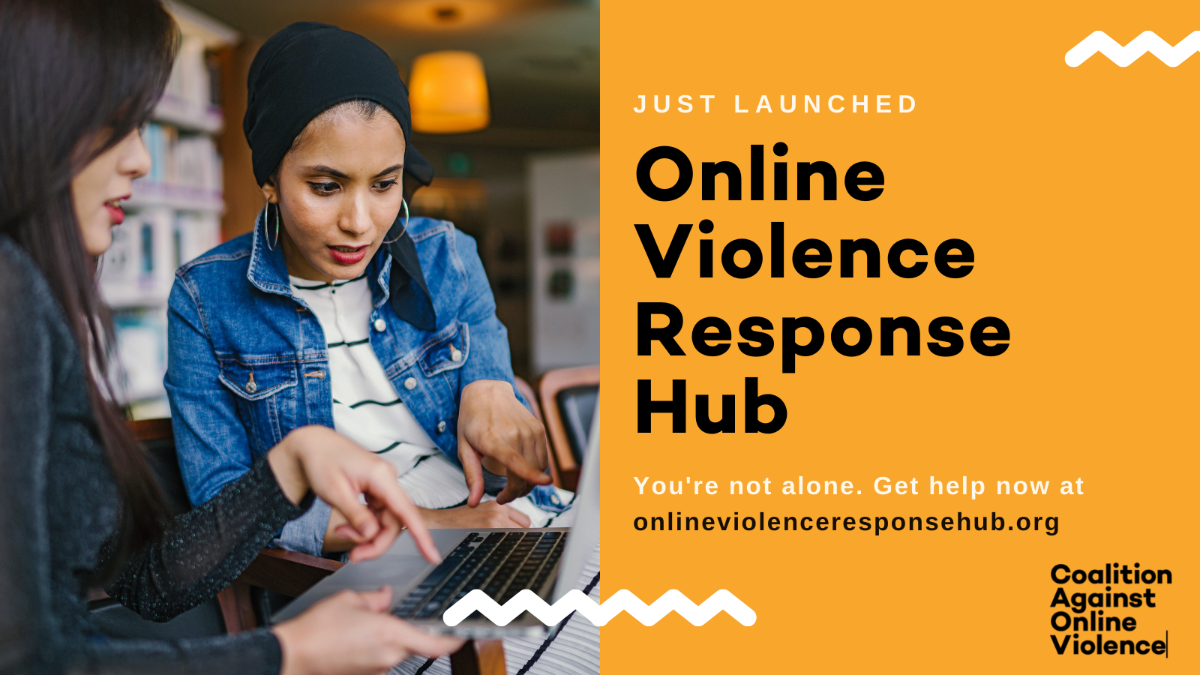
Amid growing online violence toward women in journalism, the IWMF launched the Online Violence Response Hub to aid victims.
The IWMF’s Coalition Against Online Violence is home to many resources to aid victims of online violence, the Online Violence Response Hub being the newest addition. (Image credit: IWMF)
The Coalition Against Online Violence today launched an Online Violence Response Hub to aid women journalists with the rising threat of violence online. The Coalition is led by the International Women’s Media Foundation (IWMF) with funding from Craig Newmark Philanthropies, the Emerson Collective, Jigsaw, Knight Foundation, and the Luminate Group. This first-of-its-kind suite of support will provide women journalists with ways to fight back against online violence while protecting their privacy, accessing trauma support, pursuing accountability, and continuing to work without self-censorship.
On September 23rd, The Women’s Funding Network will host The Feminist Factor, a virtual conference to discuss feminism across the globe.
The Feminist Factor will take place on September 23rd, 2021 from 10:30AM EDT to 6PM EDT. (Image credit: WFN)
Women Funded 2021 is a virtual gathering of all gender and racial justice funders, allies, and individuals committed to place-based solutions across the globe for gender equity. Women Funded ‘21 will explore the intersectional nature of feminism as a driver of our work, of the values that we hold, and how we are collectively building a more equitable future.
This gathering is open to the broader philanthropic and movement community as well as the WFN membership.
Editor’s Note: This Q&A was created with the assistance and guidance of Claudia Carasso, Founder and Principal of Elastic Minds. This post was originally published on September 10, 2020.
Suzanne Lerner, Co-Founder of clothing brand Michael Stars, is an activist entrepreneur with a primary focus on gender & racial equality, and the economic empowerment of women & girls. (Image Credit: Suzanne Lerner)
The conversation below explores Lerner’s experience as a philanthropist, business leader, and activist entrepreneur, as well as what other funders and company leaders can do to advance an intersectional focus in their approaches to philanthropy.
Editor’s Note: The following article was originally published on February 17, 2021.
When it comes to maximizing our financial impact, there is often an “either/or” approach to leveraging wealth. Do we use our dollars to fund a philanthropic effort, like a campaign or organization dedicated to women and girls, or do we turn our funds toward investment opportunities, like supporting companies with a strong commitment to diversity?
Ellen Remmer is a Senior Partner at The Philanthropic Institute (TPI) and Champion of Invest for Better. (Image Credit: Invest for Better/Ellen Remmer)
As new forms of giving spring up to meet the challenges — and opportunities — of a digital society, we are able to move further away from that attitude of “either/or.” There are ways to stretch our donor dollars further — through two types of collectives that maximize impact.
Editor’s Note: This post was originally published on October 19, 2017 and has been updated to include more organizations and funders addressing sexual assault prevention.
It’s On Us is one of the organizations that receives NFL support to help educate the public about how to take responsibility for consensual sex. (Image credit: It’s On Us)
In the age of #MeToo, it will probably come as little surprise to learn that I am also a survivor of sexual assault. I don’t want to go into the details here (if you want the full story on that, you can watch this video). When I became a social worker, I chose to build my professional life around helping survivors both heal and fight for justice. Over the past 25 years, I have treated hundreds of sexual assault survivors and their families. I have helped people achieve justice, and I have also seen many survivors choose not to engage with the justice system for fear of being further traumatized. Sadly, that fear is not unrealistic.
Editor’s Note: This post on feminist giving trends was originally published on August 3, 2020.
Since I launched Philanthropy Women in 2017, and even before then, I have been paying close attention to the feminist giving trends, as well as the big plays and strategy shifts, happening in feminist giving. For that reason, I thought it might be helpful to enumerate some of those gender equality giving trends and other happenings, and flesh out what they mean both now and for the future of philanthropy.
State-based women’s funds such are getting more powerful as large foundations like the Bill & Melinda Gates Foundation begin to recognize the value of their existing infrastructure to leverage social change. (Image credit: Women’s Foundation California)
1. Women Funders Are Getting More Ambitious With Their Strategies
I see women funders getting more ambitious with their strategies in many different ways, both in terms of the subjects they will fund as well as the approaches they are willing to try. This means they are doing bolder things with their money, which often translates into helping our culture to become more inclusive and knowledgeable about difference. For example, Mona Sinha, Chair of the Women Moving Millions Board, has done some amazing work lately supporting the documentary Disclosure. This film does groundbreaking work in terms of exploring the growing world of gender transition, helping this community to be seen and valued by society. Being unafraid to cross the barrier and fund the LGBTQ community is just one of the many bold strategies that more feminist funders are adopting more frequently.
The New York Women’s Foundation has given nearly $3M in grants to organizations helping underserved communities post-pandemic.
NEW YORK, NEW YORK – MAY 14: The group Developing Artists performs onstage during the 32nd Anniversary Celebrating Women Breakfast at Marriott Marquis on May 14, 2019 in New York City. (Photo by Monica Schipper/Getty Images for The New York Women’s Foundation)
On June 28th, The New York Women’s Foundation announced almost $3 million in grants reflecting the organization’s fundamental strategy of early and long-term investment in community-rooted organizations led by women and gender expansive people addressing critical issues in underinvested communities. The Foundation’s latest round of grants are critically important to women, gender expansive people and their families in a post-COVID reality. The Foundation is charging ahead and bolstering investments in advancing racial equity, ending mass incarceration in New York City, increasing economic stability for low-income families, and eliminating gender-based violence.