Ashindi Maxton is a Senior Advisor and funding strategist for the Women Donors Network (WDN) with extensive work in democratic reform, racial justice, and education.
Editor’s Note: This is an editorial by Ashindi Maxton, who is a Senior Advisor for the Women Donors Network (WDN), one of our Spotlight Organizations. The editorial tells the story of how WDN and its allies have been able to effectively bring in more partners to fund the resistance. As Ms. Maxton points out, the Threshold Fund and the Democracy Alliance joined WDN and Solidaire to expand the Emergent Fund, amplifying the ability of that fund to protect and empower marginalized communities.
The Rockefeller wives at a dinner party in New York, March 1949. From left to right: Abby (Babs) Rockefeller Pardee, Peggy McGrath Rockefeller, Mary “Tod” Rockefeller, Blanchette Hooker Rockefeller, Barbara “Bobo” Sears Rockefeller, and Mary French Rockefeller. (Photo Courtesy of the Rockefeller Archive Center)
The storied fortunes of the Gilded Age are so closely associated with the men who made them that the wives who used that money to help society are often unknown. Wealthy women in the 19th century were expected to be little more than heir-producers and society hostesses.
But women such as Louise Whitfield Carnegie, Abby Aldrich Rockefeller, and Gertrude Vanderbilt Whitney did not spend their days merely updating the Social Register, getting fitted for sumptuous gowns, or meeting for luxurious, gossipy lunches. They also worked hard to make sure that their families’ fortunes—all built on the backs of the less fortunate—were used to help others. Wealthy 19th century women were not supposed to work outside the home, and they certainly had no financial need to do so. But these women expanded their limited roles through charitable work and in doing so created a new public role for women.
Women’s Funding Network LEAD awards went to eight women’s fund leaders participating in the Young Women’s Initiative.
Leaders from eight women’s funds across the country that spearheaded the Young Women’s Initiative received the 2018 Leadership and Diversity Award (LEAD), given by the The Women’s Funding Network at their annual summit, taking place this week in San Francisco.
The New York Women’s Foundation is a 2017 recipient of The Women’s Funding Network’s Leadership and Diversity (LEAD) Award, for launching the first Young Women’s Initiative in partnership with the New York City Council and inspiring similar efforts by women’s foundations across the country.
While awareness about gender and racial bias has been growing in nonprofits and foundations, particularly over the past 30 years, the leadership of those organizations has primarily remained white, straight and male. One foundation has been steadily fighting to change that, though, and now, its fight is more important than ever.
Third Wave Fund has been around for over 25 years, and is celebrating its 20-year anniversary as a foundation. The fund was founded by Rebecca Walker, daughter of renowned writer Alice Walker, and Dawn Lundy Martin, Catherine Gund, and Amy Richards, who recognized the extreme underfunding of grassroots feminist activism, and set out to remedy this funding gap.
Emily Bove, Executive Director of the Women Thrive Alliance, which supports grassroots organizations in gender justice work globally.
“We see our members—grass roots organizations—as the experts,” says Emily Bove, Executive Director of the Women Thrive Alliance.
Women Thrive comprises 285 organizations in 53 developing countries. Based in Washington, D.C., Women Thrive supports its member groups in advancing women’s rights globally. “We only work with groups that are engaged in advocacy,” says Bove, citing Women Thrive’s expertise in this area. The other criteria for Women Thrive membership is that the participant organization have female decision-makers at the helm. Given its expansive membership roster and skeleton staff, much of Women Thrive’s work is virtual, including online courses aimed at helping member groups organize around gender and poverty issues.
While Women Thrive prioritizes women’s rights and equal access to education, Bove stresses that all aspects of development are interconnected, and breaking them up into discrete parts is somewhat arbitrary. “Women don’t wake up and say, ‘today my focus is on my child’s education and tomorrow it’s on clean water.’” The goals of women holding political power, controlling their own bodies, receiving fair pay and having access to education are interrelated, and all are key in furthering development.
Women Thrive was founded in 1998; Bove joined the organization in 2014, and has been leading it since 2016. When I spoke to her by phone in late August, she had just returned from a long-delayed visit to her native France. Bove grew up the town of Annecy in the French Alps, attended university in Lyon, obtained a master’s degree in Migration Studies from the U.K.’s University of Sussex, and subsequently came to the U.S. for a graduate exchange program at Georgetown. Along the way, she has worked in Cameroon, the Caribbean, and the Indonesian province of Acheh. “I’ve always been interested in development, but over time found I was increasingly drawn to its connections to women’s rights,” says Bove. Prior to joining the Women Thrive Alliance, Bove worked for the World Bank on climate change issues.
Women Thrive is an umbrella organization, and prospective members typically learn of it from the internet, conferences, and—“most exciting to me,” says Bove—being recruited by current members. While Women Thrive does not engage in direct service or distribute grants, it has provided tailored support to groups in Sierra Leone, Burundi, the Democratic Republic of the Congo, and Nigeria. A team from Women Thrive recently returned from the small west African nation of Sierra Leone where it delivered a “Raise Your Voice Workshop” on female genital mutilation. Helping local groups eliminate such practices is a key focus of Women Thrive. The UN has long campaigned against what it has termed “harmful practices” toward women and girls (which, in addition to body mutilation, include early and forced marriages, and “honor” crimes directed at females).
Bove says that one way of pushing governments on issues such as female genital mutilation is to leverage the United Nations’ “Sustainable Development Goals” (SDGs) which were adopted by 193 countries (including Sierra Leone) in 2015. Of the 17 goals, Women Thrive and its membership are particularly focused on number four (Quality Education) and number five (Gender Equality). Bove argues that “the UN goals can be mechanisms for outlawing genital mutilation.” She notes that advocates in Sierra Leone are increasingly demanding that their leaders fulfill promises they have made regarding outlawing such practices (which were banned in 2014, although enforcement has been lackluster). The workshops that Women Thrive conducted in Sierra Leone aimed to improve female advocacy groups’ messaging, enabling the organizations to better pressure key actors in government and civil society to change attitudes and practices surrounding women’s bodies.
Another aspect of the UN SDGs (which, in addition to education and women’s equality, include goals devoted to reducing poverty, global co-operation, and environmental protection) is their time frame. The goals are to be accomplished by 2030, which, says Bove, goes well beyond the 2 to 3-year periods of many grants and programs. “Long-term processes need to be supported,” she says. “Our development model has failed to do that.” Moreover, one can’t assume that gains in female rights will be maintained over time. Bove cites her experience working in Aceh, the northern Indonesian province devastated by the 2004 Indian Ocean earthquake and tsunami. “It’s a Sharia-dominated province where women actually had a lot of rights following the tsunami,” she says, “but 10 years later those rights have decreased.”
Women Thrive has never received funding from the U.S. government, counting instead on support from organizations including NoVo Foundation, Hewlett Foundation, New Field Foundation, Imago Dei Fund, and S. Albert Fund at the Philadelphia Foundation, among others. Women Thrive also depends upon “Thrive Ambassadors,” individual donors who leverage their own networks to promote the alliance and its mission.
While Women Thrive is not government-funded, Bove says the U.S. has typically supported empowering women globally. “In the past eight years [prior to the 2016 election], as a U.S.-based organization we could rely on U.S. leadership on these issues.” However, under the current administration, Bove says that “common understanding” has changed, and Women Thrive and like-minded organizations are “back to basics in explaining why supporting women and girls globally is important.” Bove cites a particular example: the latest U.S. delegation to the UN’s Commission on the Status of Women included an explicitly anti-LGBTQI organization (The Center for Family and Human Rights) that has been designated a hate group by the Southern Poverty Law Center.
A further area of serious concern is the U.S. 2018 fiscal year budget, which proposes reducing the International Affairs Budget by 32 percent, including deletion of the “International Organizations and Programs” line item. Naturally, this would undermine the U.S. commitment to UN Sustainable Development Goals, and other support for women’s rights and development globally. “We are working to find champions to maintain development aid,” says Bove, noting that Women Thrive has been informing members of the Senate and House about how damaging the budget cuts will be to women’s lives. To this end, Women Thrive is putting member organizations directly in touch with lawmakers, and Bove notes that “Members of Congress always seem surprised to hear from women and girls on the ground.”
While the current administration poses a significant threat to women’s rights globally, Bove notes that in the last two decades women have increasingly been acknowledged as central to development efforts. “The agenda of the global women’s movement is being mainstreamed into the fight against poverty,” she says. Finally, female-led grass roots organizations and social movements from around the world are demanding more of their political and institutional leaders, and such increased momentum will likely continue, regardless who occupies the White House.
Editor’s Note: Women Thrive is one of three spotlight organizations for Philanthropy Women. These organizations have been designated by our sponsors for media amplification.Read More
Ray Morris, CEO of CREDO, which has given more than $9.9 million to gender equality and is the largest corporate funder of Planned Parenthood.
As I continue to survey the landscape of gender equality giving, I am occasionally struck by a particularly effective corporate model for supporting this work. One of the most stunning examples of how corporations can turn their dollars around for the cause of women’s rights is CREDO Mobile, which has been funding gender equality movements for the past three decades.
CREDO Mobile grew out of Working Assets, one of the early corporations to grasp the idea of the potential for funding nonprofits via business. The company started as a long distance provider, and then went into credit cards. One of the company’s first credit card products was a card that generated donations to progressive nonprofits with every use.
Today, CREDO Mobile is led by Ray Morris, who spoke to me from his San Francisco office. Morris has only been CEO of CREDO for a year and a half, but his voice swells with pride and awe at the work CREDO has done, and will continue to do, to fund progressive movements with their business model.
In fact, gender equality accounts for about 11.7% of CREDO’s funding for progressive causes, since the company estimates making a total of $84 million in contributions since its founding, with an estimated $9.9 million of that going to women’s issues. This means CREDO is beating out philanthropy as a whole in its funding of gender equality, since estimates of the percentage of foundation funding going for women and girls range from 5-7%.
How does CREDO do it? “Every month we give $150,000 to 3 groups that are chosen by an internal committee that represents every working department of our company,” said Morris, in a recent interview with Philanthropy Women. These funds go for a wide range of progressive causes, including gender equality nonprofits like Women for Afghan Women, NARAL, and the National Coalition Against Domestic Violence.
In this way, employees of CREDO are actively engaged in decision-making around the company’s giving, and the company’s gender equality giving goes to support a wide range of gender equality nonprofits. CREDO is the largest corporate funder of Planned Parenthood and a significant funder for the Ms. Foundation, the Global Fund for Women, and the Feminist Majority, but it also funds groups doing grassroots work like the National Latina Institute for Reproductive Health, which takes a multi-dimensional approach to helping women get empowered, from health to education to political involvement. When the National Latina Institute recently presented at CREDO Mobile, Morris said it was a profound experience for him, realizing the power of their work. “It made such an impact on me that I was crying in the background,” he said.
The list goes on, and on! CREDO Mobile has funded a wide array of women’s rights organizations. (See full document below.)
“So from very large to very small, we’re doing everything we can to push into these areas and support women’s empowerment,” he said, which goes beyond reproductive rights and into addressing issues like the wage gap and women in political leadership.
Morris emphasized the value of CREDO’s funding of voter registration and other grassroots activism that impacts political representation, coming back to the point that until we have more women in political leadership, it will be an uphill battle to fund gender equality efforts.
But Morris sees hope for more growth in gender equality funding. “What I find is that everyone is starting to piece it together. Everyone is starting to connect the dots that gender equality in healthcare, pay equality, involvement in the legislative process, is all part of the same story of women’s empowerment.”
“The only way it changes is with more women in the legislative process,” said Morris. “If there were more women involved, would there be having an all-out war on women’s reproductive rights? Probably not.”
So how is CREDO working to get more women into government? By funding nonprofits that take a multidimensional approach.
Morris said that due diligence on that funding is key to the process of closing the political leadership gap. “We ask nonprofits, ‘What are you doing with this money?’ and ‘How have our past grants helped you?” We analyze the data, so that when you see the nonprofits we fund year after year, it’s groups that are highly effective, and groups that are highly effective are generally working in a multidimensional way.”
I thought I’d try picking Morris’s executive brain, so I asked him what he would do if he was the CEO of a foundation that was worth $50 million and made $5 million a year in grants for gender equality. How would he portion out the grants, and would he give more weight to getting women into office?
“I would never pretend to be a high level executive woman. My IQ would likely go up by about 100 points,” he quipped. “But we know for a fact that there are national groups that are good at getting headlines, but are not able to point to real social accomplishments. At the same time, we can point to certain groups and say ‘these people move the ball.’ We’re going to look at organizations that are measurably effective at pushing their agenda.”
Morris gave the question a bit more thought and then added, “My guess is, if I were a high level executive woman at a foundation, I would know that my approach needed to be multidimensional, and so that would include opening clinics in underserved areas, it would include people on the ground knocking on doors to get women voting and running for office. And it would also include finding like-minded people, both men and women in the House and Senate, and helping those people campaign effectively so that we can make those changes in the long term.”
In the age of Trump, let’s hope more corporations take a page from CREDO’s playbook and figure out how to be part of the solution, particularly for gender equality. “We know that no one in the world has enough money to solve these problems,” said Morris. “So we know we’re going to need to influence the larger players of business and government.”
Check out this list of CREDO Mobile’s funding for gender equality to get a full picture of how CREDO is working this terrain.
At CREDO, where I serve as CEO, we are executing an aggressive response to Trump that focuses on protecting vulnerable communities at risk, delegitimizing an unqualified candidate who was opposed by a majority of voters, obstructing Trump’s hateful and aggressive agenda and going on the counterattack wherever possible. Our community of more than 4.7 million CREDO activists is mobilized and already fighting Trump. We know firsthand that individual actions can avalanche into large-scale transformation.
We also contribute more than $150,000 every month to progressive nonprofits from revenue generated by CREDO Mobile, our progressive phone company. That adds up to more than $1.6 million this year and over $81 million over our 30+ years in business.
My top priority is to protect America’s least-privileged and most-vulnerable people. In many ways, I feel like I’ve lived the American dream. I grew up poor with a single mother of four kids. She fought every day to put food on the table and build a better life for us. Thanks to her, I was able to achieve success in engineering and the telecom industry.
That path allowed me to see my own privilege and understand how doors that I walked through in the past were less open for those of different races and ethnicities. I am afraid that even those small openings are slamming shut.
Women in philanthropy: Check out Hala Ayala in Virginia, as part of an inspiring wave of women running for office in the state, which is having its elections this year. Hala Ayala is doing the very important work of standing up for what is right in an environment increasingly hostile to women and immigrants.
Hala Ayala, Candidate for 51st House District in Virginia and President of the Prince William Chapter of the National Organization for Women.
In Prince William County, Hala Ayala is hoping to bring her values of empowerment for women and equality for all to Richmond, and at the same time, send home one of Virginia’s leading anti-choice, anti-immigrant delegates.
Jennifer and Peter Buffett, Co-Founders, Novo Foundation (Photo Credit: Taylor Crothers)
If a foundation’s mission is to build more healthy partnerships in the world, what better place to start than with their own internal partnerships? In fact, for Peter and Jennifer Buffett of the NoVo Foundation, developing their own partnership as a couple coincided with developing the mission of their foundation, which is to transform relationships across the globe from “domination and exploitation” to “collaboration and partnership.”
I had approached NoVo wanting to talk to either Jennifer or Peter individually, but, apropos of their partnership approach to philanthropy, I got them both. They spoke to me by phone from their home in the Hudson Valley, about two hours north of New York City.
A new report with support from the Annie E. Casey Foundation and other partners helps to identify the multiple barriers faced by LGBTQ people of color in the nonprofit sector.
You work in a nonprofit that supports strengthening diversity and being conscious of race and gender bias, and yet you feel discriminated against year after year, as you are bypassed for promotions and other career advancement opportunities. It’s a familiar story for many LGBTQ people of color, and now a new report has come out that fills a big research gap — the lack of data on leadership of LGBTQ people of color in the nonprofit industry.
“It was tough being one of a couple staff people of color in an LGBTQ organization. I would see things others didn’t and I would name it. That was sometimes really difficult for my superiors to hear,” said a multiracial transgender respondent quoted in the study.
The report, Working at the Intersections: LGBTQ Staff and the Nonprofit Leadership Gap, was recently released by the Building Movement Project (BMP), which is fiscally sponsored by Third Sector New England, which recently changed its name to TSNE MissionWorks. BMP started as a collective of 20 people working in small nonprofits who came together in 1999 in order to maximize impact with up-to-date analysis on issues related to social justice and nonprofit operating practices. BMP was originally housed at the Hauser Center for Nonprofits at Harvard, and moved to Demos in 2003.
The report makes specific recommendations for nonprofits and foundations to address LGBTQ bias in the workplace.
This LGBTQ-focused report builds on the recent release of Race to Lead: Confronting the Nonprofit Racial Leadership Gap, which BMP released last month along with unveiling a new website, Racetolead.org, which serves as a new online hub for knowledge and action on the racial leadership gap in nonprofits.
One of the key findings of the study is that most LGBTQ people of color see racial discrimination as the primary barrier to advancement toward leadership positions. Twice as many survey respondents identified race as negatively impacting on their careers compared to sexual orientation, according to the study’s findings.
This finding informs the report’s recommendations that nonprofit agencies take a primary focus on race, in order to lay the groundwork for the organization to begin addressing issues of anti-LGBTQ bias. The report also recommends that funders and nonprofits adopt nondiscrimination policies that include sexuality and gender identity, and establish systems for monitoring and addressing discrimination.
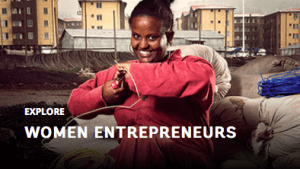
In another unexpected “first” for our nation, Donald Trump decided to have his daughter, Ivanka sit in for him at the G20 leaders’ summit in Hamburg, Germany. But another, perhaps more important first also took place at this meeting: The World Bank Group announced the creation of an innovative new facility that plans to invest more than $1 billion to advance women’s entrepreneurship. This new facility will give women in developing countries a leg up when it comes to increasing their access to capital and markets that will help them start and grow businesses.
The World Bank, along with President Donald Trump, recently announced We-Fi, which will finance women entrepreneurs in developing nations.
“This incredible facility will have a significant impact on women’s economic development around the world,” United States President Donald Trump said in a recent press release from the World Bank. “It will help increase opportunities and economic growth while addressing unique barriers women entrepreneurs face. I am proud the United States is helping to lead support of this unprecedented initiative.”