Activist women donors are the wave of the future for social change. Activism is an essential part of feminist philanthropy. Women donors are often hyper-conscious of their inner-outer integrity as feminists, and work hard to align their activism with their giving. See how women donors take action with feminist activist giving for social change.
Hello there, my philanthro-friends. Welcome to another week of feminist giving updates, as well as other revelations in the world of gender equality news.
Holly Madison, former girlfriend of Hugh Hefner and creator and star of Girls Next Door, discusses her diagnosis of Aspergers in Secrets of Playboy, and how she was drawn to living at the Playboy mansion early on because it gave her a sense of community. (Image credit: Secrets of Playboy)
This week, I did it. I binge-watched the first six episodes of Secrets of Playboy on A&E.
I did it for a lot of reasons. First, because I care about women, especially women who have survived trauma and are trying to make peace with that trauma and with the world that allowed it to happen.
As we continue to celebrate Black History Month, one of the highlights so far has been the February 2022 edition of Meet the Philanthropist, my virtual interview series with leading women philanthropists and leaders in philanthropy.
Kendra Fox-Davis, Chief Program Officer, Rosenberg Foundation (Image credit: Kendra Fox-Davis)
This time, I had the distinct pleasure of a discussion with Chief Program Officer of California’s Rosenberg Foundation, Kendra Fox-Davis. I was thrilled to speak to Kendra, who is returning to have this conversation as a bit of a follow-up from the WOC Symposium in November. Everything she shared was so inspiring, and I knew she was the perfect person with whom to explore, remember, and embrace for Black History Month, particularly in the realm of fundraising and philanthropy.
Well hello, my philanthro-lovelies! I hope you are doing well, and are ready to dive into some more feminist giving news!
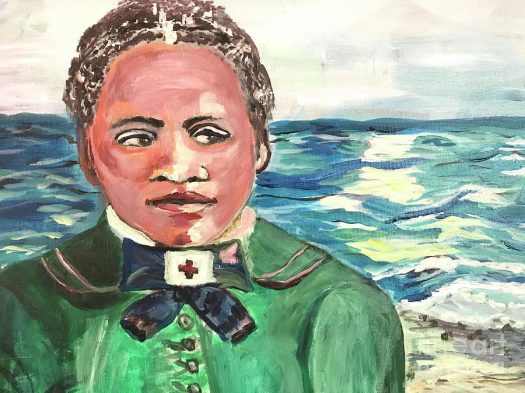
Happy Black History Month! This painting is entitled “Biddy Mason, 1852, Los Angeles” and features one of the first Black women to own property in Los Angeles, Biddy Mason. The year is 1852 in this depiction. Biddy Mason is age 34 and not yet freed. She would go on to petition for her freedom in California in 1856, and received her certificate of emancipation in 1860. Before and after her emancipation, Biddy Mason practiced as a nurse and mid-wife. (Image credit: Kiersten Marek)
Today I’d like to start with a quote from MacKenzie Scott, who has outstripped her ex-husband’s lifetime of giving in just two years. Here are her words from when she made her promise to fulfill The Giving Pledge:
Greetings, Friends! Hope you are all well and enjoying life as best you can. We continue to watch the scene on feminist giving news, and I still receive tons of emails pitching stories for PW. It pains me that I do not have the time to do more writing. I have had to increase my therapy caseload to cover the downsizing of PW, so my time for research and writing is more limited now.
Google and other corporations fund initiatives for women and girls and release publicity suggesting that they are big champions of the cause. At the same time, these corporations continue to fund anti-feminist legislators through the Republican State Leadership Committee. See details in the feminist happenings listed at the end of this post. (Image credit: Google on Twitter)
When I get time to come back to PW, one of the things I like to do just to cheer myself up is to take a random stroll through the PW Funder Database. It just makes me feel better about the world to know that funders exist that are putting real dollars into gender equality strategies every day.
Well my friends, welcome to 2022! January is a time of research and development here at Philanthropy Women, as we refine our strategy going forward. After much consideration, we have decided not to rebrand or change the name of the website. Because it so accurately fits the content, it needs to stand. And because the gender equality issues in philanthropy still need so much attention, we will be keeping the name.
Beyond that, the future is much less clear. It turns out that by doubling up on niches, philanthropy being one niche and gender equality being (sadly) another niche, we have struggled to find a solid foundation. However, this does not mean that gender equality philanthropy does not need and deserve more media attention. In fact, our struggle is kind of like a real-time example of the entrenched marginalization of women, and feminist ideas, in the charitable realm.
As many of you know, along with founding and editing Philanthropy Women, I am also a psychotherapist. So today I am offering something new here for readers: a chance to explore your inner wellness through hypnosis.
Scene for hypnosis: Sunset at Oakland Beach in Warwick, Rhode Island on Sunday, November 14, 2021. (Image credit: Kiersten Marek)
One of my specialties as a therapist is identity development. I have spent many years studying and writing about the archetypes — the different dimensions of human identity that come into play across the lifespan. In 2018, I also trained and became certified as a hypnotherapist. This is a hypnosis session to help you get a deep night’s sleep, and to give you a chance to experience your inner Innocent.
In February 2021, 18-year-old Úrsula Bahillo was murdered by her ex-boyfriend, an officer in the Buenos Aires police force. The femicide led a group of Argentine women to create the organization Mujeres en Acción, an entirely volunteer brigade of women providing support to survivors of gender-based violence in the Latin American region.
Volunteers spanning from six countries in Latin America are coming together to support domestic abuse survivors, using a platform called GetBEE. (Image credit: Mujeres in Accion)
Úrsula’s untimely death was the 44th femicide registered in Argentina in the first two months of 2021, and its occurrence prompted immediate outrage in the country. After all, the 18-year-old victim had followed all the recommended steps: she reported her attacker to the police stations and the courthouse. She got a restraining order that made it illegal for him to come near her, but he broke the restraining order numerous times. One major way the system fell apart for her: Úrsula requested a “panic button” from the police, but she never got one. Her last message to her friends read: If I don’t come back, tear everything down.
Editor’s Note: Philanthropy Women is proud to announce Real Women, a new fiction series by author M. A. Sheehan, to help our audience immerse in fictional works that relate to women’s experiences. The first story in the series explores a fictional pros and cons list of a sexual assault survivor.
It’s finally happening: America is charting its course as a nation to remedy our problems with gender equity and equality. What is contained in the momentous document, and how will it affect funding for gender issues?
The Biden-Harris administration’s Gender Policy Council recently released the country’s first National Strategy on Gender Equity and Equality. (Image credit: White House Report)
The President and Vice President begin the document by locating the issue in our current context of heightened stakes for women and girls in the US and across the globe:
This document, the first-ever United States government strategy on gender equity and equality, is a part of that noble American tradition [of valuing equality]. It comes at an inflection point for the economic security, safety, health, and well-being of women and girls in our nation and around the globe. COVID-19 has exacerbated preexisting economic, health, and caregiving crises that disproportionately impacted women and girls long before the pandemic struck. Following the worst economic collapse since the Great Depression, women’s participation in the American labor force plummeted to its lowest level in over 30 years. Rates of gender-based violence have risen significantly, and racial and ethnic inequity has deepened.
Editor’s Note: The following essay by Dr. Susan M. Blaustein, Founder and Executive Director, WomenStrong International, discusses the transformational potential of #MeToo to empower change locally and globally.
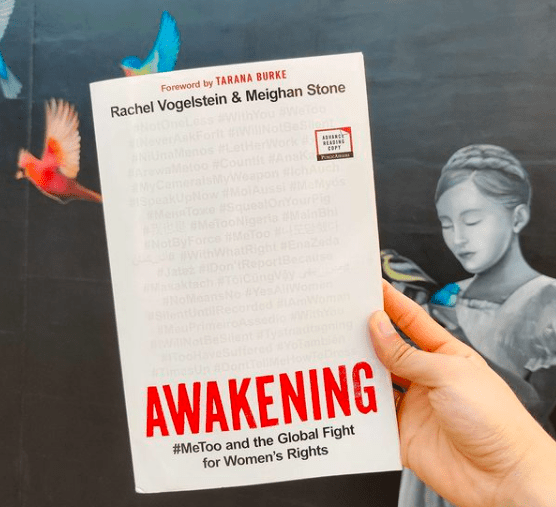
In their remarkable new book Awakeningabout the global #MeToo movement, feminist scholars Rachel Vogelstein and Meighan Stone have shined a light on the courage, creativity, and resilience of women all over the world who have alchemized their pain as survivors of sexual violence into fierce, undaunted activism.
Awakening by Rachel Vogelstein and Meighan Stone explores the way #MeToo is connecting women across the globe. (Image credit: PublicAffairs on Instagram)
These brave women, from Brazil to Tunisia to Nigeria to Sweden and myriad places in between, have harnessed available digital technologies to share their experiences of sexual harassment and assault, connect with other women, sound the alarm loudly, and press for change. They’re fighting not only for victims’ safety in reporting these crimes and accountability for their perpetrators; enraged and emboldened, they’re aiming to institutionalize legal protections and disrupt the prevailing cultural and religious moraes that have long sanctioned violence against women in the first place.