To Grow Women’s Rights Globally, We Must Invest in Women Locally

Editor’s Note: The following essay is by By Dr. Susan M. Blaustein, Founder and Executive Director, WomenStrong International.

As someone who has funded and worked with women’s organizations to advance gender justice, human rights, and global development, I learned long ago that women always know what they and their families and communities need, in order to thrive; they simply lack the financial and technical resources needed to put their solutions into practice. 

 Partners working together at WomenStrong International’s Girls’ Education and Empowerment Retreat. (Image credit: WomenStrong International)

That’s why I celebrate the recent high-profile donor efforts to invest in women’s priorities. Yet, even with these bold commitments, the total philanthropic support for women’s organizations remains a paltry fraction – 1.6 percent — of U.S. grantmaking, according to the Women’s Philanthropy Institute’s latest Women and Girls Index, published by the Indiana University Lilly Family School of Philanthropy. If we hope to improve the lives of and opportunities for women and girls worldwide, those percentages must rise dramatically. 

Read More

Marsha Morgan on How Collective Giving Can Uplift Women and Girls

Editor’s Note: This interview in our Feminist Giving IRL series features Marsha Morgan, a founding member of the Birmingham Change Fund and past Chair of the Community Investment Network.

Marsha Morgan, courtesy of Marsha Morgan

1. What do you wish you had known when you started out in your profession?

I wish I had started my journey in philanthropy with a proper understanding of the true definition of philanthropy: love of humanity. Having this knowledge and perspective would have allowed me to take more ownership of my power and would have changed how I leveraged my resources as a philanthropist when I first started working in collective giving.

2. What is your current greatest professional challenge?

Read More

Favianna Rodriguez on the Power of Art to Heal Polarization

Editor’s Note: This interview in our Feminist Giving IRL series features Favianna Rodriguez, President of The Center for Cultural Power, a national organization investing in artists and storytellers as agents of positive social change.

Favianna Rodriguez, courtesy of Favianna Rodriguez
  1. What do you wish you had known when you started out in your profession?

I wish I’d known more about the racial and gender barriers that exist for women of color leaders in the non-profit sector, particularly the arts and culture space. I knew how to pitch my ideas and raise money, but I lacked information on how to navigate situations in which I was experiencing unequal treatment due to my gender and racial identity. I was in many spaces where the safety of women was not prioritized. Unfortunately, over the last 20 years of being an institutional leader, I’ve experienced numerous uncomfortable situations including sexual harassment, the theft of my ideas by male leaders, being bullied by men when I challenged sexist assumptions, and being trained to lead in a boy’s club type of approach. Before, I didn’t have the language or tools to navigate these situations. But that has since changed, and I’m incredibly thankful for that because it gives me the opportunity to create safe spaces for other female and gender non-confirming leaders to thrive.

Read More

New Nonprofit Seeks To Find The Lost Women Of Science

The Lost Women of Science Initiative, started by Katie Hafner and Amy Scharf, is on a mission to fund and raise awareness about women in STEM.

The Lost Women of Science Initiative was launched to support women in STEM and advocate for their work throughout history and in the future. (Image credit: Lost Women of Science)

Journalist and author Katie Hafner, and bioethicist Amy Scharf, announced the launch of the Lost Women of Science Initiative, a new educational nonprofit organization created to research and promote the stories of the forgotten women of science. The initiative’s mission is to raise awareness of the pivotal role women have played in scientific discoveries and innovations, and to promote interest in STEM education and careers – especially among girls and young women. Harvey Mudd College, long a leader in STEM education, has signed on as fiscal sponsor, and early funding has come from The Gordon and Betty Moore Foundation and Schmidt Futures. The initiative will also partner with Barnard College, one-third of whose graduates are STEM majors.

Read More

Anticipating Philanthropy’s Ability to Fully Fund Gender Equality

Philanthropy Women May be Winding Down Due to Lack of Support for Feminist Media about Donor Leadership, Strategies and Practices.

With nearly 1,100 posts published, an unusually high and rising domain authority, and hundreds of feminist leaders and strategies highlighted, Philanthropy Women is simultaneously a feminist media powerhouse and running out of resources. And it’s not for lack of trying to find those resources, or generate them on our own.

Photo by Valentina Conde on Unsplash

What happened to us? It’s a case of what I can only describe as our strategy anticipating a time when philanthropy is ready to fully invest in equality for women and other marginalized groups. We’re not there yet.

Read More

Michelob ULTRA $100M Pledge Shifts Marketing to be Gender-Inclusive

Michelob ULTRA has committed $100 million to make its marketing gender-inclusive, with the goal of increasing the visibility of women in sports.

Women beer drinkers may have more good news to celebrate as beer brands like Michelob begin to pay more attention to their marketshare. (Photo by Elevate on Unsplash)

As one of the top selling beer brands in the country, Michelob ULTRA believes that every athlete deserves to experience an equal level of joy in sports. But women’s sports don’t always receive the same level of coverage in the media, which is a critical factor in ensuring that female athletes are paid equally. That’s why Michelob ULTRA is committing $100 million over the next five years to increase visibility for women’s sports through:

Read More

How Could Biden Enhance Effectiveness of New Gender Policy Council?

A call to action has been issued by the Center for American Progress to the White House Gender Policy Council.

The Center for American Progress put out a report that includes several strong and worthwhile suggestions for the Biden administration. The goal of the report is focused on how the current administration can advance gender equality on both U.S soil and abroad. 

Image Credit: Lindsay Lamont on Unsplash

The crux of the report is focused on the White House Gender Policy council and how it can expand the pre-existing Women, Peace and Security Act (WPS) of 2017. 

WPS has actually existed since 2000, starting after being recognized by the U.N Security Council. Since the implementation of WPS in the United States, a requirement is in place that every four years specific governmental departments and agencies must incorporate WPS  into their work. Further, they are required to host WPS-specific training for personnel, to track the progress of implementation, and to report to Congress on this progress. 

Read More

Cannabis One of Best Industries for Gender Parity, Says AskGrowers

Irene Stepanenko, CEO of AskGrowers, reflects on gender equality in the cannabis industry as a celebration of Women’s Equality Day.

AskGrowers is a community of people working in the cannabis industry to provide trusted product advice and information. (Image credit: Unsplash)

Women’s Equality Day is celebrated annually on August 26 to commemorate the adoption of the 19th Amendment to the U.S. Constitution, which prohibits states and the federal government from denying citizens the right to vote based on sex. The right of women to vote and participate in society and various industries was first enshrined at the state level. In practice, women still continue to struggle for equal opportunities and privileges. This sentiment was echoed in former President Obama’s Proclamation on August 25, 2016, “Today, as we celebrate the anniversary of this hard-won achievement and pay tribute to the trailblazers and suffragists who moved us closer to a more just and prosperous future, we resolve to protect this constitutional right and pledge to continue fighting for equality for women and girls.”

Read More

The Brain Health Gap and How It is Hurting Women

Data reveals how women suffer disparities in health funding, especially related to brain disorders. As a result, funding for women’s brain health is alarmingly insufficient and contributing to expensive long-term treatment costs.

Women have been coming out and speaking against the inequities they face in health care. For years, women have been saying that the healthcare field has not had their best interests at heart. They frequently have expressed that the medical community has treated them with dismissal and misdiagnosis. 

WHAM’s research shows a deep disparity in funding for women’s brain health. (Image credit: WHAM)

New data reveals this to be especially poignant in terms of women dealing with brain health disorders. An organization by the name of WHAM (Women’s Health Access Matters), released a report about this data. 

Read More

Black Women Philanthropists Honored by New WPI Initiative

The Women’s Philanthropy Institute (WPI) has launched a new initiative to honor black women and their contributions to philanthropy.

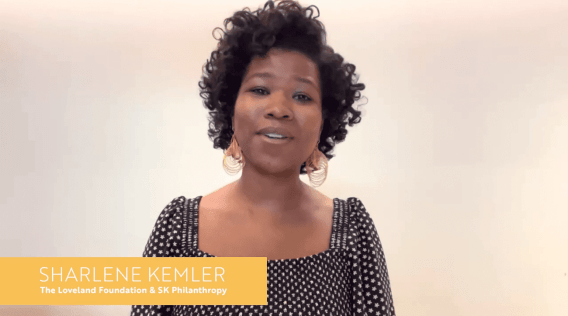
Sharlene Kemler, CEO of the Loveland Foundation, is among the 10 women on WPI's Black Women Give Back List for her contributions to the mental health of black women. (Image credit: IUPhilanthropy)
Sharlene Kemler, CEO of the Loveland Foundation, is among the 10 women on WPI’s Black Women Give Back List for her contributions to the mental health of black women. (Image credit: IUPhilanthropy)

On August 31st, the Women’s Philanthropy Institute (WPI), part of the Indiana University Lilly Family School of Philanthropy, announced the honorees of the Black Women Give Back List, a new initiative to spotlight the important work and contributions of Black women philanthropists. Created in partnership with The Women Invested to Save the Earth (WISE) Fund, the backbone organization for Black Philanthropy Month, the list spotlights 10 outstanding Black women philanthropists from diverse backgrounds who use their time, talent, treasure, testimony and ties to make the world a better place.

Read More