Radha Ruparell: What No One Tells You About Having COVID

I am a 39 year old woman living in New York and I have been battling COVID-19. Today is Day 16. This disease is like nothing I have ever experienced in my life. What no one tells you about having the Coronavirus is that it is a rollercoaster ride, not just physically but also emotionally.
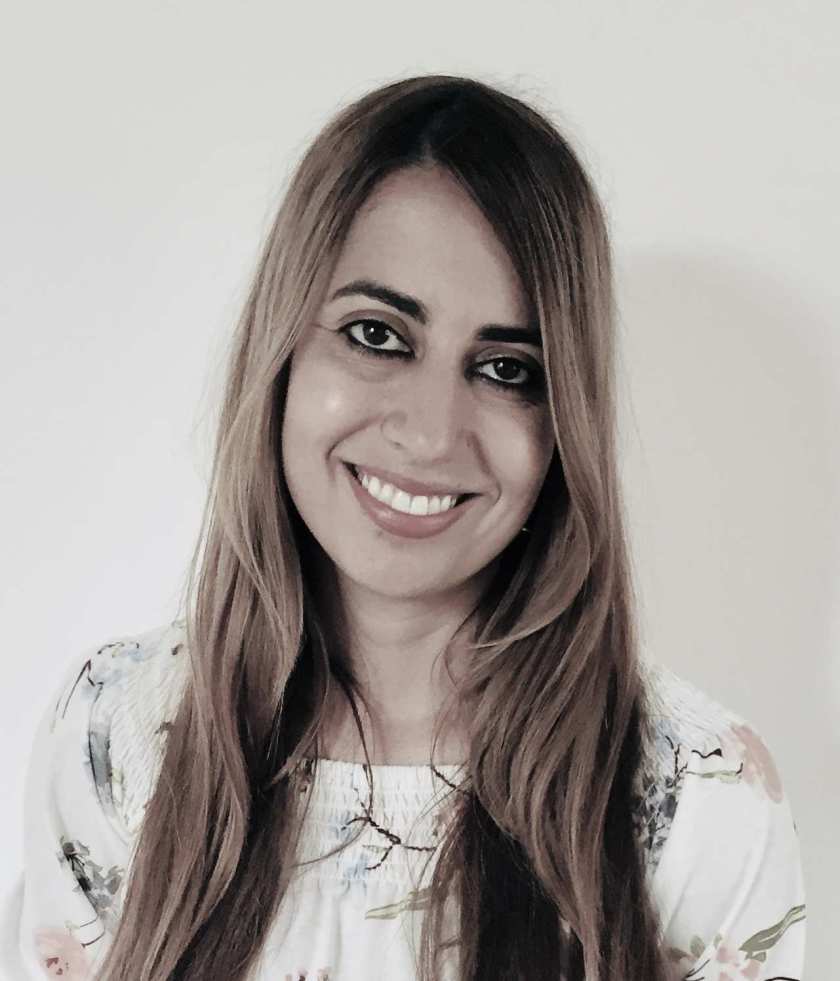
having covid
Radha Ruparell discussed the difficulties of having COVID and strategies for self-care. (Image credit: Radha Ruparell)

Over the past few days, I have felt haunted, scared for my life, in pain, confused, anxious, angry, alone, worried that I am losing my mind, and terrified of others getting this. I have also had: the most profoundly moving experiences of connection with loved ones and strangers; gratitude for the life I have lived; presence in moments I had once taken for granted; awe for those on the front lines; and an experience of slowing down and letting go.

Read More

Free Virtual Therapy for People of Color Affected by COVID-19

The COVID-19 Free Virtual Therapy Support Campaign is a Boris L. Henson Foundation (BLHF) effort to raise money for mental health services for communities of color.

free virtual therapy
Taraji P. Henson starred in the 2016 movie Hidden Figures about the key role a group of female African-American mathematicians played in the U.S. space program’s early years. (Image Credit: BLHF)

According to the BLHF, “the campaign was developed to cover the cost for virtual or tele-therapy services by licensed, culturally competent clinicians in our network.” Up to five sessions are covered, and those seeking COVID-related virtual therapy can register with BLHF. The Foundation is seeking donations to support the program (Text NOSTIGMA to 707070), as well culturally competent providers to provide services.

The BLHF was founded in 2018 by actor and mental health advocate Taraji P. Henson and is led by Executive Director Tracie Jade Jenkins. It has seen strong interest in the tele-therapy program since it debuted on April 15. In a Today Show interview, Henson, who most recently has appeared on the television series Empire, said, “We had to shut the server down … that’s how big the need is.” She argues that for many, the hardships imposed by COVID-19 are “added trauma,” and that mental health services are helping “thousands stay alive.”

Read More

Women Lead Better in COVID: 5 Reasons Why

The question is being asked all over the internet: why, oh why, are we following men?

For the sake of humanity, the only sensible thing to do right now seems to be to turn off the toxic male leaders, like literally stop broadcasting the President’s updates, and turn on the women leaders of the world who can get us through this crisis.

women lead better
The Right Honourable Jacinda Ardern, 40th Prime Minister of New Zealand. (Photo Credit: Wellington Government, 2018)

Unfortunately, it’s not that easy to pivot away from men’s leadership, especially here in the U.S. They are entrenched at the top, and seem to become more teflon as they ascend to higher levels of authority.

Why are women better leaders for this moment in human history? Let me count the layers of experience that result in women being the better leaders during COVID or any health crisis:

Read More

The Entrenched Pandemic of Gender-Based Violence

We have a problem. 

We have known about gender injustice for centuries, yet only over the past one hundred years have we been more publicly working to end this vast inequality. The rights women have claimed, from voting rights to reproductive rights, have been hard fought and hard won. Undergirding all of those public battles, there has been the ongoing battle for a woman’s right to safety at home. Gender-based violence has plagued people for as long as we have written history, yet even during our current health pandemic, this social problem continues to be defined as a private issue.

pandemic of gender-based violence
Indrani Goradia shares her expertise on gender based violence during COVID. (Image credit: Sharon McCutcheon, Unsplash)

One reason for this is that governments and those who create policy insist on spreading false narratives, such as the one recently sent out by the Malaysian government: Don’t nag your husbands during quarantine and social distancing. This form of misinformation does nothing to help women be safe. It allows violence against women to be blamed on women. Home is the most dangerous place for a woman, and violence against women is about power and control.

Read More

NDWA Announces $4 Mil Care Fund for Domestic Workers

In March 2020, the National Domestic Workers Alliance announced the Coronavirus Care Fund, a campaign to raise $4 million in emergency relief funds for domestic workers affected by the coronavirus pandemic.

On March 16, the NDWA announced its campaign to raise $4 million to support domestic workers impacted by the coronavirus pandemic. (Image Credit: NDWA)

Domestic workers, a large percentage of whom are women, immigrants, and people of color, are among the unsung heroes on the front lines of the pandemic. They take care of homes, families, and people who are at high risk of catching the virus, like the elderly and people with chronic illnesses. What’s more, many domestic workers find themselves faced with the COVID-19 crisis without any kind of support network, savings to fall back on, or union to protect their rights.

Read More

COVID Reflections by Emily Nielsen Jones: In the Womb, Together

All of creation is groaning and in pain, like a woman about to give birth.
~ adapted from Romans 8:22

Here where I live outside of Boston, most of us are about one month into our self-isolation during COVID. As the exponential curve of this global pandemic slowly, eerily touches every corner of our planet and every facet of our lives, a collective rug is being pulled out from underneath our settled ways, systems, taken-for-granted institutions, beliefs, and moment-to-moment expectations which shape how we each make our way through a day. 

COVID

I am honored to add my voice to this special COVID-19 series hosted by Philanthropy Women, together musing on what implications this global pandemic has for feminist philanthropy and all who are working for justice, human betterment and a more sustainable way of living together on this planet. As every one of these writers describes, though we wish we could banish this virus from our planet, collective change has been unfolding right before our eyes.

Read More

How’s Rhode Island Managing the COVID Crisis?

Editor’s Note: The following interview is with Melissa Jenkins Ph.D., clinical neuropsychologist and clinical assistant professor at Warren Alpert Medical School of Brown University.

How would you describe Rhode Island’s response to the crisis?

rhode island
Melissa Jenkins, PhD, shares her perspective as a psychologist and community leader on COVID-19 in Rhode Island. (Photo credit: Angelina Rose Photography)

Rhode Island is an amazingly interconnected place. Even when we can’t be physically close to one another, I see all of my neighbors and friends reaching out to donate whatever assets and unique talents they have to help neighbors get through this crisis. We have incredible leadership in this fight. Right now, in living rooms across Rhode Island, little girls are setting up pretend podiums to play ‘Giving the Daily Briefing’, and they’re all saying the same thing. “Knock It Off.”

Read More

African Girls Respond to COVID

Coverage of COVID-19 first focused on Asia, then Europe, and now increasingly North America. The virus, however, is global, and while there have been relatively few cases reported in Africa, the numbers are increasing, as is awareness about how to combat COVID-19.

Mr. Ablaye Sow; WGEP staffers Khady and Casimir; and Our Sisters Lead participants Absatou, Mouhamed, and Alima. (Photo credit: WGEP)

As is the case everywhere, education and preparedness are essential in blunting the effects of the novel Coronavirus. The Women’s Global Education Project (WGEP), an Oak Park, Illinois-headquartered non-profit, has been helping educate girls in Africa since 2004. It has worked with grassroots leaders in Kenya and Senegal to co-design programs that have impacted thousands of girls and women in poor communities with low levels of school enrollment and literacy. With the new challenge of COVID-19 afoot, Harriet Spears, WGEP Strategic Partnerships and Communications Manager, has shared stories with PW about how WGEP teams in Kenya and Senegal are working with local communities on reducing virus transmission.

Read More

Film in COVID: Creating New Ways to Expand Reach and Vision

In this global pandemic time, philanthropic resources are stretching to a maximum. As well, our vision of what is philanthropic is also expanding. For the many of us working in film in COVID, we are isolated in our homes, our intercommunications online have tripled and quadrupled. Virtual meetings and presentations abound. We are tackling service in entirely new ways and through newly chartered venues.

From the Women Make Movies website, promoting their Virtual Film Festival. THE REST I MAKE UP began March 27. (Image Credit: WMM)

The independent film community is rallying around extending ways it can serve both its filmmakers and audiences – all while shut in at home. The Art House Convergence community listserv initiated a discussion early on and set some guidelines about safety as the coronavirus started to spread in the United States. Two days before SXSW cancelled, members of AHC pondered “when and if” questions. Then, one by one, art house movie theatres posted their closing statements, and a discussion emerged on what message to place on the empty marquees.

Read More

NY Women’s Foundation Gives Responsive Grants to Women in COVID

(March 26, 2020) The New York Women’s Foundation is launching the 2020 Resilience-NYC: COVID-19 Response and Recovery Fund to provide organizations funding to solve critical issues facing vulnerable and marginalized communities in New York City

new york
The New York Women’s Foundation will make $1 million in rapid-response grants to help women, transgender and nonbinary people and their families during COVID. (Image Credit: NWYF)

NEW YORK, March 26, 2020 /PRNewswire/ — The New York Women’s Foundation (The Foundation) announced the launch of 2020 Resilience-NYC: COVID-19 Response and Recovery Fund, providing $1,000,000 in grants to organizations helping women, transgender, gender nonconforming, non-binary (TGNCNB) individuals, and their families most impacted by COVID-19. Marginalized populations are among the most vulnerable during times of crisis, along with the local organizations that know how to best support them. The COVID-19 Response and Recovery Fund will provide vital resources to organizations on the front lines for some of the hardest hit communities to address immediate and long-term needs.

Read More