Philanthropy, You Should Be Ashamed of Your Greed

Every single one of you on this list who is not giving in the double digits as a percentage of your wealth: you should be ashamed.

If everyone on this list gave at 10% or more of their net worth, what a different world we would be living in. If they gave at 20% of their net worth, we might begin to approach a more just society racially and gender-wise. (Image credit: Chronicle of Philanthropy)

I don’t like to use the shame card. I don’t use it much as a parent, and I don’t use it much as a therapist. But when I look at these numbers, all I can think of is how little regard these human beings appear to have for their fellow human beings. And yet they appear to have no shame about it. In fact, they receive a near constant stream of praise and adulation for the teeny tiny bit that they give of their vast wealth.

Read More

My Survival Is Worth Funding: NCRP’s Brandi Collins-Calhoun

Editor’s Note: This interview in our Feminist Giving IRL series features Brandi Collins-Calhoun, National Committee for Responsive Philanthropy Senior Movement Engagement Associate.

Brandi Collins-Calhoun, courtesy of Brandi Collins-Calhoun

1. What do you wish you had known when you started out in your profession? 

I’m not sure that there was anything I could do to prepare to enter work that would be grounded in philanthropic feminism, especially knowing that the radicalization of mainstream feminism hasn’t happened across all movements and sectors yet. However, I wish I knew the weight of the shift from my life as an organizer fighting for my survival and safety to be centered, to my current role petitioning that my survival and safety is worth funding. I wish I knew how to find the balance and show up for myself through that process. There is often guilt and weight that comes with centering my needs in this work because this fight is so much bigger than just me, but I am reminded that Audre Lorde named that, “Caring for myself is not self-indulgence. It is self-preservation, and that is an act of political warfare.” That balance between holding the sector accountable and caring for myself is a radical act that is necessary for me to continue the work.

Read More

(Liveblog) How Justice and Giving Intersect with Philanthropy Together

On Wednesday, February 3rd, Philanthropy Together hosted the second part of their webinar series surrounding giving circles and social justice. Moderated by LiJia Gong of Radfund, the panel featured Sarah David Heydemann (Radfund), Mario Lugay (Justice Funders Giving Side), Marsha Morgan (Community Investment Network), and Sian Miranda Singh ÓFaoláin.

Sara Lomelin, Executive Director of Philanthropy Together, introduced the day’s moderator and panelists, and encouraged attendees to share their locations and organizations.

The Social Justice Giving Circle Project

Gong began by introducing The Social Justice Giving Circle Project, which explores the relationship between giving circles and today’s social justice movements, both how it currently exists and what’s possible in the future.

Read More

Become an Invest for Better Circle Leader: Apply by February 10th!

If you’ve wanted to form an impact circle but aren’t sure how to get started, Invest for Better has the program for you. Applications are now open for the Spring 2021 Cohort of Invest for Better’s Circle Leader program. Kicking off on February 11th, this free training program offers the resources and know-how for women to form, lead, and grow their own impact investing circles.

The Spring 2021 cohort of Invest for Better’s Circle Leader training program begins on February 11th, 2021. (Image Credit: Invest for Better)

Invest for Better is a national initiative aimed at helping women demystify impact investing, take control of their capital and mobilize their money for good. It is non-profit and non-transactional, designed to address the “aspiration gap” between women’s interest and their action by overcoming obstacles to participation, and building trusted peer communities.

Read More

Women as Leaders, Not Victims, on the Path to Universal Healthcare

The intense repercussions of the COVID-19 pandemic have led to massive ripple effects felt around the world, particularly in marginalized communities and for the women and girls within them. Within this crisis, however, there are also opportunities for improving the status of women leaders and healthcare workers, and advancing toward universal healthcare as a basic human right.

Image Credit: WGH

However, the prevailing narrative around the pandemic tends to paint women and girls as “victims” of the pandemic, or victims of issues and events that impact access to healthcare. This may not be the best way to frame the issue, asserts Sarah Hillware of Women’s Global Health. Relegating women and girls to the role of “victim” can be a major barrier in the path to universal healthcare.

Read More

Mars Aims to Empower Women With #HereToBeHeard Project

Mars, Inc. has launched #HereToBeHeard, a campaign to raise the voices of women and advance gender equality in businesses and the workplace.

Mars, Inc. has launched a global study to listen to and elevate the voices of women. (Image credit: Mars, Inc.)

As part of the company’s Full Potential platform for action on gender equity in its workplaces, sourcing communities, and the marketplace, #HereToBeHeard asks women everywhere: “What needs to change so more women can reach their full potential?” The responses will inform the concrete actions Mars will take – both within its value chain and in broader society – to close the gender opportunity gap.

Victoria Mars, Mars Board Member and ambassador of Mars’ Full Potential program: “Women have played a powerful role in our history and leadership at Mars. But we have more to do. We’re striving to empower more women within our workplace, and across our extended value chain. 

Read More

(Liveblog) Building Multicultural Leadership with Ready to Lead

On Thursday, January 28th, the Girls Leadership team and representatives from Open Access, TPG, Morgan Stanley, the National Hockey League, and TIME’S UP gathered to discuss the changing face of the American workforce. Based off of the organization’s pivotal Ready to Lead report, the second of Girls Leadership’s three roundtable discussions focused on the implications of the report’s findings on the workforce of the future.

The report details leadership supports and barriers for Black and Latinx girls and exposes the factors that make it difficult for these girls to rise into leadership positions. External challenges like the tendency for school systems and workforce upper management to be dominated by white employers, leaders, and authority figures, represent a major barrier to Black and Latinx girls carrying their own torches of leadership into the future.

Read More

(Liveblog) Leveraging the Unique Power of Women’s Collective Giving

Bright and early on Wednesday, January 27th, women from all over the country joined Sondra Shaw-Hardy and Carmen Stevens of Women’s Giving Circles International (WGCI) for a collaborative workshop on collective giving.

Sondra opened the event by welcoming the attendees and speakers, and introducing the day’s topics.

“The power of women’s philanthropy has changed not only the countries we live in, but changed us as well,” she said.

Carmen Stevens on Global Giving Circles

Carmen Stevens introduced the history of WGCI, which works to provide educational resources for women all over the world looking to start and grow their own giving circles. Primarily focused on circles outside of the United States, WGCI facilitates circle creation, networking, and mentorship all over the globe, but particularly in Latin America, Europe, and the organization’s most recent programs in Asia.

Read More

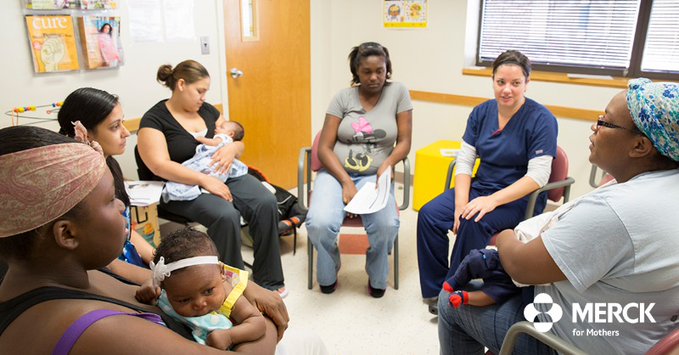
Responding to Worsening Maternal Mortality, Merck Grants $9 Million

On January 27th, Merck for Mothers, Merck & Co.’s $500 million global initiative with the sole purpose to “create a world where no woman has to die while giving life,” announced this year’s cohort of grant designations. These grants total an impressive $9 million allocated to their Safer Childbirth Cities program, the community-action coalition fighting the rising rates of preventable maternal death in the US.

(Image Credit: Merck for Mothers)

After requesting a second round of grant proposals in June of 2020, Merck for Mothers narrowed down the proposals depending on their eligibility and proposed initiatives for addressing the maternal health disparities within their cities. The chosen communities will be provided with up to $1 million in funding to apply their own evidence-based interventions. On top of the 10 cities from the first cohort of grants released to Safer Childbirth Cities in 2019, cities included in the newly accepted grant proposals are Brooklyn, NY; Detroit, MI; Norfolk, VA; San Francisco, CA; St. Louis, MO; Tampa, FL; Tulsa, OK; Trenton, NJ; and Washington D.C.  

Read More

(Liveblog) Realigning Powerful Systems by Valuing Health and Equity

On Tuesday, January 26th, the Philanthropy Women team gathered with representatives from The Jane Club, Women in Global Health (WGH), PSI, and Maverick Collective for a discussion on the ways radical philanthropy, operating alongside women-led movements, can lead to systemic change, particularly in health care services and employment, for women and girls around the world.

The Jane Club hosted a live discussion on women’s access to healthcare, as well as what feminist funders can do to advance gender equity in funding and global health. (Image Credit: Jane Club)

Editor-in-Chief Kiersten Marek moderated a discussion between Rena Greifinger of PSI/Maverick Collective and Sarah Hillware of WGH. Hosted by The Jane Club, a network of female-identifying persons and nonbinary and male allies, the event focused on ways to create more equitable healthcare systems by transforming the philanthropic system toward justice.

Read More